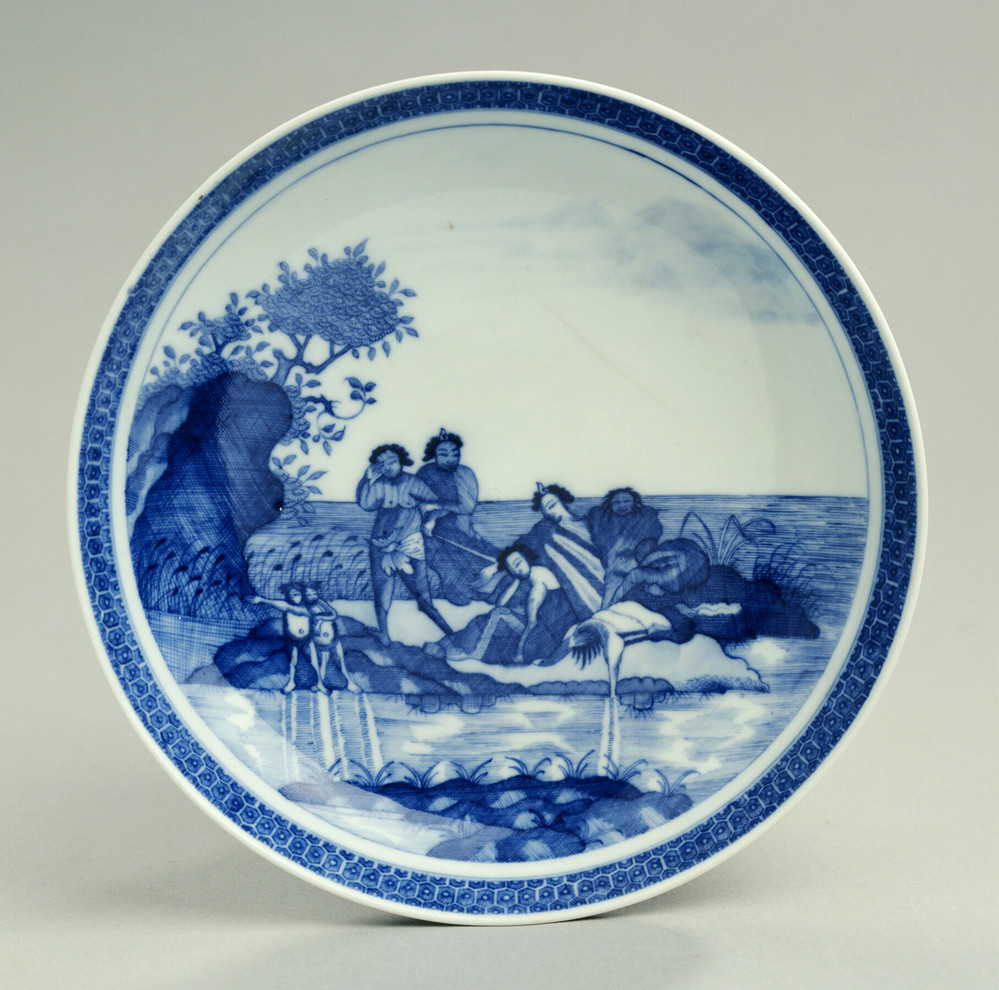
Dish on footring, spreading sides. Decorated in underglaze blue, depicting figures on a rocky outcrop by sea. On the left two children with arms outstretched. Around the rim a narrow band with a honeycomb motif. The reverse is undecorated. Design part based on the print 'The Fall of Phaëton' (Johannes Teyler, 1688-98, Opus Typchromaticum). The figures are rivergods in distress. They have asked Zeus to control Phaëtons uncontrolled ride, as he is causing the rivers to dry up. Zeus responds by throwing lightning a Phaëton, who falls to his death.
Dish on footring, spreading sides. Decorated in underglaze blue with a representation of a group of people on a spit of land jutting into a lake or the sea. To the left on the shore children with outstretched hands, at the far left rocks with trees. Around the rim a narrow band with honeycomb motifs. The reverse is undecorated. This dramatic and moving representation has yet to be identified. The figures (castaways or slaves?) have dark skins and appear exhausted, or are in despair. Undoubtedly, the Chinese porcelain painter painstakingly copied the scene from a Western print, possibly an engraved illustration in a travelogue or one of the countless descriptions of strange and exotic places that were published in The Netherlands in the 17th and first half of the 18th century. Plates, dishes, lotus-flower shaped dishes, teacups and saucers in various shapes and even drip-trays for a jardinière are known with this representation, all in underglaze blue. Polychrome versions do not seem to exist. An (unpublished) cup and saucer in the Kasteel Loosdrecht Collection has the text ‘Chineesche Begrafenis’ (Chinese Funeral) written in ink in 19th-century script on the back of the saucer....